Brain & Nervous System Health
What Causes Ringing in Your Ears?
7 common causes of tinnitus, what to watch for, and how midlife changes may fit into the picture.
Published November 9, 2026
Tinnitus means hearing a ringing, buzzing, hissing, or whooshing sound without an external sound source. It may affect one ear, both ears, or seem to come from inside your head.
Tinnitus is a symptom rather than a disease, and its cause is not always identifiable. The NIH’s National Institute on Deafness and Other Communication Disorders estimates that approximately 10–25% of adults experience tinnitus.
7 Common Causes of Ringing in the Ears
1. Hearing loss
Age-related or noise-induced hearing damage is strongly associated with tinnitus. Changes in the sound reaching the brain can affect its hearing pathways, even when hearing difficulties are subtle.
2. Loud noise exposure
Concerts, headphones at excessive volume, power tools, and workplace noise can damage hearing. Tinnitus may follow a single intense exposure or develop after repeated exposure over time. Protecting your hearing matters even if ringing seems temporary.
3. Earwax or ear infections
Earwax blockage or an ear infection can change how sound travels through the ear. These are sometimes reversible causes: treating the underlying problem may improve tinnitus. Avoid trying to remove deep earwax with cotton swabs or other objects.
4. Medications
Certain NSAIDs, high-dose aspirin, selected antibiotics, and chemotherapy drugs can contribute to tinnitus. The risk depends on the specific drug, dose, and individual circumstances. Review possible contributors with your clinician rather than stopping prescribed medication yourself.
5. Jaw problems (TMJ)
Jaw clenching, teeth grinding, and temporomandibular joint dysfunction can contribute to tinnitus in some people. Tell your clinician if jaw pain or movement changes the sound; this may help guide assessment.
6. Inner ear disorders
Conditions such as Ménière’s disease can cause tinnitus, especially alongside episodes of vertigo or fluctuating hearing loss. These symptoms need evaluation rather than assuming all dizziness and ringing have the same cause.
7. Head or neck injuries and other medical conditions
Head or neck injuries can affect structures involved in hearing or alter sensory input associated with tinnitus. Other medical conditions may contribute too. Vascular causes are particularly important when ringing or whooshing follows your heartbeat; this pattern is called pulsatile tinnitus.
Why Does Tinnitus Happen in the Brain?
The inner ear converts sound into signals carried by the auditory nerve to the brain. When auditory input changes, activity in the brain’s hearing pathways can also change. The brain may perceive sound even without an external sound source.
- Inner ear
- Auditory nerve
- Brain auditory processing
- Perceived ringing
Attention, emotion, and stress-related systems can influence how noticeable or distressing tinnitus feels. This does not mean the sound is imaginary or that everyone’s tinnitus has the same mechanism.
Can Perimenopause or Menopause Cause Ringing in the Ears?
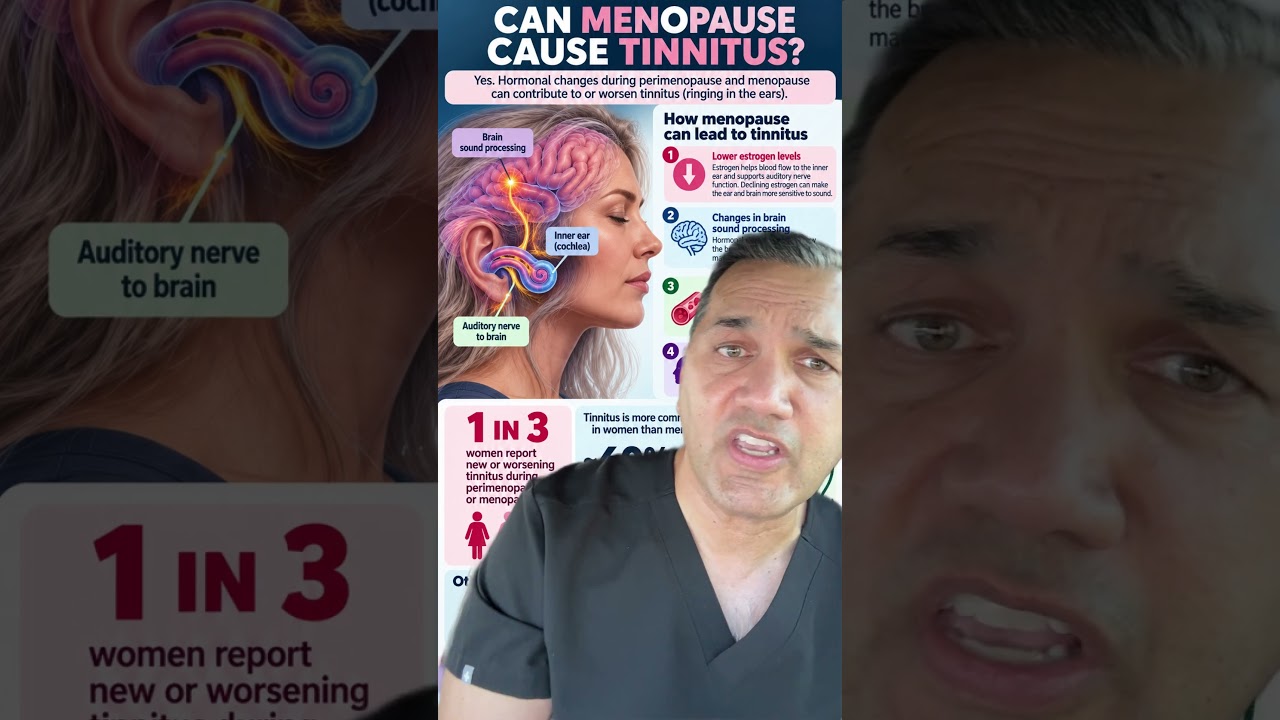
Women sometimes report tinnitus during perimenopause and menopause. Hormonal changes may influence auditory processing or symptom perception, but direct causation is not established.
Sleep disturbance, stress, migraine, and age-related hearing changes can coexist during midlife. These overlapping factors may affect how troublesome tinnitus feels without proving that menopause caused it.
Estrogen deficiency is not a proven direct cause of tinnitus, and menopausal hormone therapy is not an established tinnitus treatment. New or persistent symptoms deserve their own evaluation. Read our existing guide to tinnitus during menopause for more context.
When Is Ringing in the Ears Serious?
Can Tinnitus Be Treated?
Management depends on the cause and how tinnitus affects your life. Appropriate options include:
- A hearing evaluation with audiometry to assess hearing changes.
- Treating reversible problems, such as earwax blockage or infection.
- Hearing aids when hearing loss is present.
- Cognitive behavioral therapy (CBT) for bothersome tinnitus, helping reduce distress and its impact on daily life.
- Sound enrichment or sound therapy when appropriate; benefit varies, and it is not a guaranteed cure.
- Protecting hearing from excessive noise.
- Reviewing potentially contributing medications with a clinician.
There is no universally effective medication that cures tinnitus. A personalized plan can still improve coping, sleep, and functioning, even when the sound does not disappear completely.
Frequently Asked Questions
Why do my ears ring at night?
Tinnitus may be more noticeable at night because there is less background sound and fewer distractions. Gentle background sound may help some people; persistent sleep disruption deserves evaluation.
Can stress make tinnitus worse?
Stress can increase attention to tinnitus and the distress it causes. Tinnitus can also increase stress, creating a cycle. This does not mean that the sound is imaginary.
Can menopause cause tinnitus?
Some women report tinnitus during perimenopause or menopause, but a direct hormonal cause has not been established. Hearing changes, sleep problems, stress and migraine can coexist during midlife.
Does tinnitus mean I am losing my hearing?
Tinnitus is often associated with hearing loss, but it can occur without obvious hearing difficulty. A hearing evaluation can identify changes that you may not have noticed.
Why is only one ear ringing?
One-sided tinnitus can have several causes, including earwax, hearing changes or an inner ear problem. Persistent tinnitus in only one ear warrants audiology or ENT assessment; sudden hearing loss requires same-day care.
Can tinnitus go away?
It can improve or resolve, particularly when a reversible cause is treated. Some tinnitus persists, but its impact can often be reduced with appropriate support and management.
When should I see a doctor?
Seek evaluation for persistent, one-sided, heartbeat-synchronous or bothersome tinnitus. Sudden hearing loss needs urgent same-day assessment. New facial weakness, stroke-like symptoms, or severe acute vertigo with neurological symptoms require emergency care.
Explore Related MenoCortex Guides
Related videos



Share this page
Send this page to someone who may find it helpful.
Join The MenoCortex BriefJoin The MenoCortex Brief
Get exclusive menopause and brain-health videos, my weekly neurologist's take on new research, practical insights, and subscriber-only tools.Weekly, evidence-based information about menopause and brain health, from a neurologist’s perspective.
Free. Unsubscribe anytime. Educational information only. Privacy Policy.
References & further reading
- 1.Tinnitus — causes and treatment — NIH / NIDCD
- 2.NG155: Tinnitus — assessment and management — NICE
- 3.Clinical Practice Guideline for Tinnitus (2024) — VA / DoD